When comparing an AI document generator vs AI document platform, many users mistakenly assume they are the same, yet the technical gap between them defines your entire professional efficiency. While both utilize machine learning to facilitate document creation, they represent two fundamentally different levels of digital infrastructure. One is a simple content creator; the other is a complete operational ecosystem.
Understanding this distinction is critical for businesses, freelancers, and students. Choosing the wrong tool can lead to fragmented workflows, reduced productivity, and technical limitations when exporting or converting files. This guide clarifies the technical and functional gaps in the AI document generator vs AI document platform debate.
Defining the AI Document Generator
An AI document generator is a specialized, single-purpose utility designed to produce a specific type of textual output. Its primary function is to ingest a prompt and return a formatted document, such as a resume, a cover letter, or a basic legal agreement.
In the technical hierarchy, these are "point solutions." While they are highly efficient at the specific task of writing, the utility of the tool ends the moment the text is generated. Within the context of an AI document generator vs AI document platform, the generator is merely the "writing" component.
Characteristics of a Standard AI Generator:
Linear Workflow: Input prompt → AI Generation → Download.
Limited Editing: Most generators lack advanced formatting or layout control.
Format Restriction: Typically restricted to PDF or DOCX exports.
Lack of Integration: These tools generally do not offer secondary utilities like image compression or PDF merging.
Defining the AI-Powered Document Platform
An AI-powered document platform functions as a holistic digital workspace. Instead of focusing solely on the "writing" phase, a platform supports the entire journey: from initial AI-assisted drafting to advanced editing, file conversion, compression, and secure exporting across multiple formats.
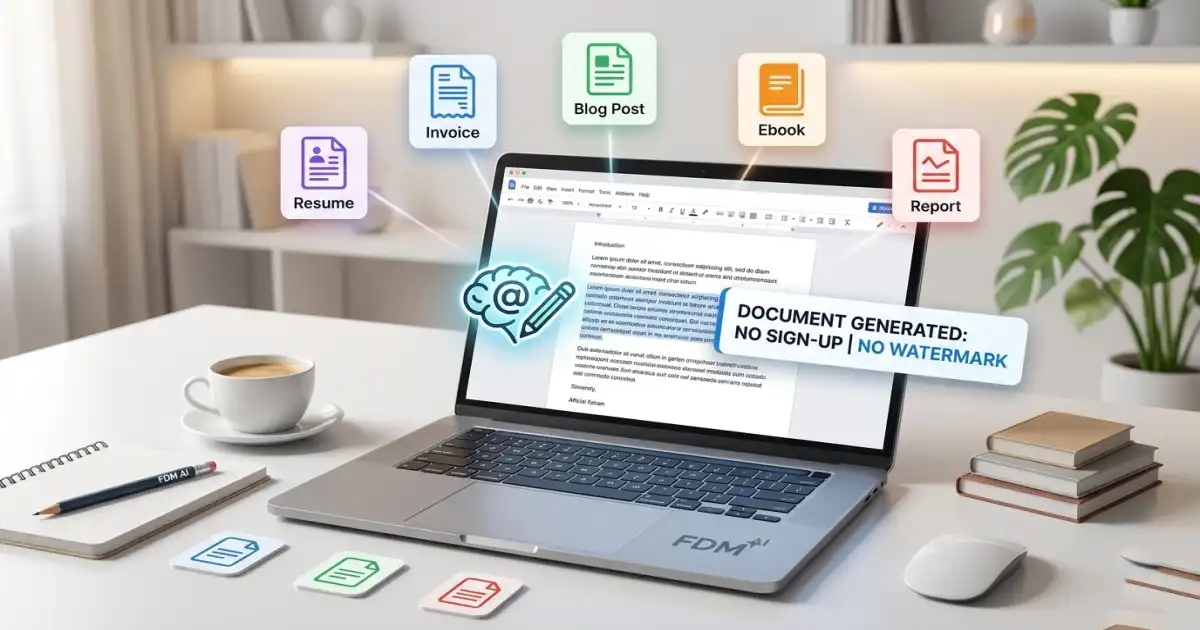
Platforms like Free Document Maker (FDM AI) represent this broader ecosystem. A platform does not ask the user to leave when a document is finished. When evaluating an AI document generator vs AI document platform, remember that the platform provides the tools to convert that document into an image, compress it for an email attachment, or generate a QR code for its digital distribution.
Structural Differences: Tools vs. Ecosystems
The most significant difference between an AI document generator vs AI document platform lies in the "multi-category" approach to professional tasks.
1. Functional Scope and Workflow
A generator acts as a smart pen—it creates the content but cannot organize or transform it. A platform acts as a modern, fully equipped office. For instance, on a comprehensive platform, a user might:
Generate an invoice using AI.
Convert a corporate logo from PNG to WebP to reduce file size.
Merge a supporting PDF document into the final invoice.
Calculate the document’s metrics using a Word Counter.
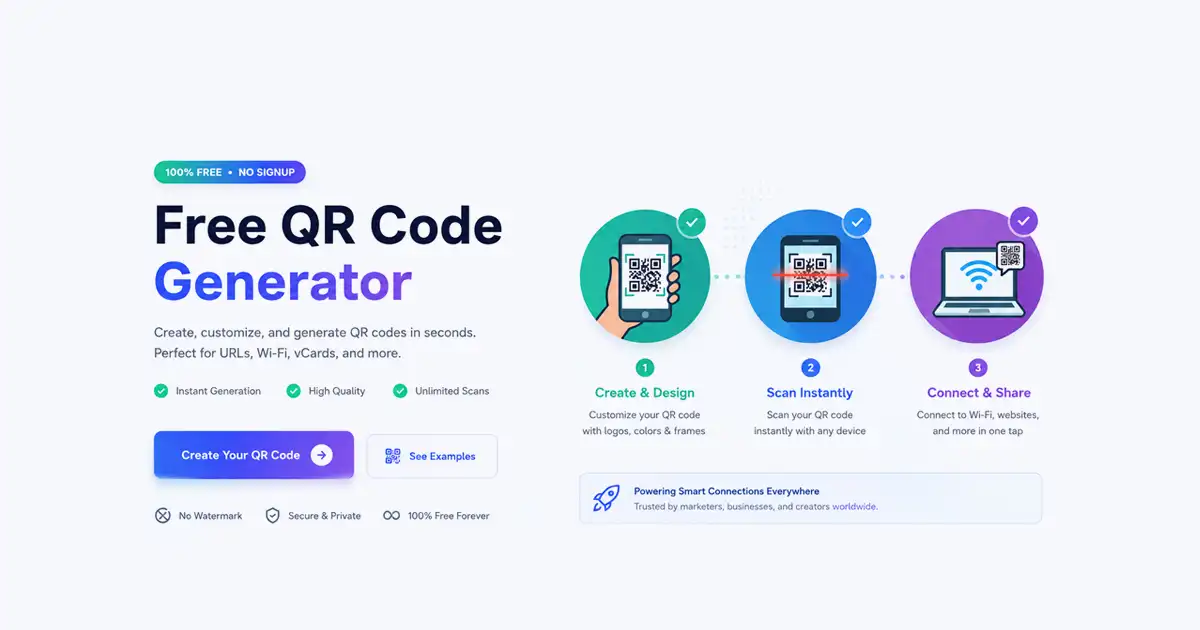
Generate a QR Code to facilitate instant payment.
2. File Format and Interoperability
The AI document generator vs AI document platform comparison highlights file flexibility. Generators are often locked into text-based formats. Platforms, however, handle a vast array of extensions including JPG, PNG, WebP, AVIF, PDF, DOCX, MP3, MP4, and ZIP. The inclusion of a high-performance Image Converter allows professionals to work across design and text boundaries without switching websites.
Accessibility and Cross-Platform Integration
Simple AI generators are usually hosted on a single landing page with limited accessibility. A true AI-powered document platform prioritizes ubiquity across all your devices.
Free Document Maker, for example, demonstrates the maturity of an AI document platform through multiple access points:
Web-Based Interface: Instant access via any modern browser without installation.
Mobile Applications: Dedicated apps on Google Play and the Amazon Appstore.
Browser Extensions: Chrome and Edge extensions for on-the-fly document management.
This multi-access experience ensures that a user’s workflow is never interrupted, which is a major win for the AI document platform over a limited generator.
Comparative Analysis: Which One Do You Need?
Feature | AI Document Generator | AI Document Platform |
Primary Goal | Content Generation | Full Workflow Management |
Editing Suite | Minimal or None | Advanced Editors & Converters |
Format Support | Limited (PDF/DOCX) | Extensive (Images, Audio, PDF, Text) |
Secondary Tools | None | Word Counters, QR Generators, Compressors |
Access Points | Website Only | Browser, Mobile App, Store Listings |
Strategic Advantages of Using a Platform
Choosing an AI-powered document platform over a simple generator provides three strategic advantages:
1. Cost and Time Efficiency
Instead of paying for multiple subscriptions—one for AI writing, one for PDF editing, and another for image conversion—a platform consolidates these costs. It also eliminates the time lost when moving files between different websites.
2. Privacy and Security
Fragmenting your data across ten different AI generators increases your security risk. A unified platform allows for a consistent privacy policy. FDM AI emphasizes browser-based processing, meaning your data is handled securely and purged after the session.
Conclusion: The Shift Toward Comprehensive Solutions
In the comparison of AI document generator vs AI document platform, the trend for 2026 is clearly leaning toward the latter. Users are no longer satisfied with a tool that only performs half the task. The modern professional requires an ecosystem that understands the lifecycle of a document—from the first word generated by AI to the final optimized file export.
If your goal is a quick, one-off letter, an AI document generator may suffice. However, for those looking to build a sustainable and efficient professional digital workflow, an AI document platform is the only logical choice.
Optimize your document workflow today. Visit The Free Document Maker to access a complete suite of AI-driven tools designed for every stage of your document journey.