Browser-Based Document Automation is the core of a new digital transformation. For the last decade, the "Cloud" was the final destination—everything moved to remote servers, requiring accounts, subscriptions, and persistent data storage. However, a new paradigm is emerging that prioritizes the user's local environment over remote databases.
As we move through 2026, speed and privacy have shifted from "nice-to-have" features to non-negotiable business requirements. The era of heavy, server-dependent SaaS is being challenged by lightweight, client-side tools. For procurement teams, small business owners, and freelancers, this shift represents a transition to workflows that work instantly and require zero login friction.
Why Traditional Cloud Tools Fail
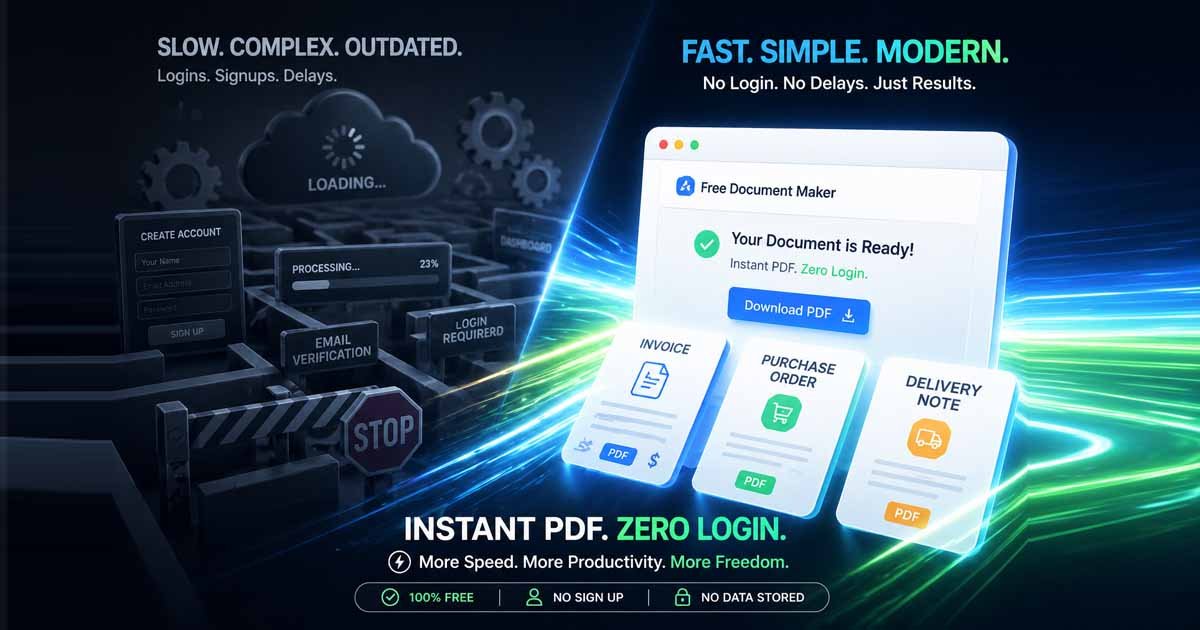
The traditional model of document generation follows a bloated, outdated path. When a user needs to create a simple business document—whether it's a bill, a shipment record, or a procurement request—they are typically forced into a multi-step funnel that prioritizes the software provider's data collection over the user's immediate needs.
1. The Friction of the "Login Wall"
Most platforms require a user to sign up before they can even see a document template. This "Login Wall" acts as a massive bottleneck for productivity. In contrast, modern Browser-Based Document Automation allows a busy founder to generate essential paperwork in under 60 seconds without ever creating an account or verifying an email address.
2. Latency and Server Dependency
Traditional tools rely on a constant "handshake" between the user's computer and a remote server. Every time a line item is added, data travels to a data center, is processed, and is sent back. This creates latency and increases the Time to First Byte (TTFB). By utilizing local processing, the power of your own device handles the heavy lifting, eliminating the round-trip delay entirely.
The Technical Edge of Browser-Based Document Automation
We are entering the age of "Local-First" software. Thanks to advancements in "Edge" processing and modern JavaScript engines, the browser is no longer just a window; it is a powerful, isolated execution environment.
By implementing Browser-Based Document Automation, instead of sending your data to a server to generate a PDF, the code loads directly into your browser's memory. This allows the document to be rendered, calculated, and formatted locally on the "edge." This isn't just about speed; it's about shifting the architecture of the web to be more user-centric.
Key Benefits of a Modern Workflow
Unmatched Speed: Because the logic happens in the browser, totals, taxes, and currency conversions update in real-time without a page refresh.
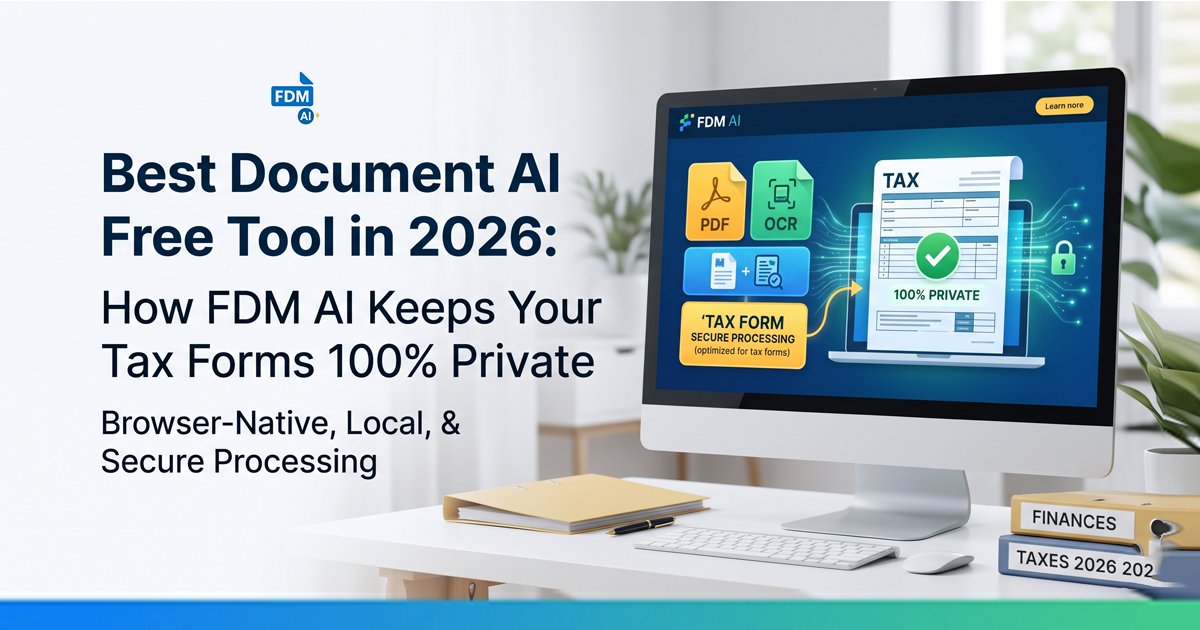
Privacy-First Architecture: In this setup, your data never leaves your machine. Your pricing, supplier details, and client addresses remain private because the system does not require a central database to store your "drafts."
Reliability: These tools are incredibly resilient. Even with a fluctuating internet connection, the locally-loaded intelligence of your tool ensures you can finish your task and export your file.
Expanding the Ecosystem: Invoices, POs, and Delivery Notes
The power of Browser-Based Document Automation isn't limited to a single document type. To run a seamless business, you need an interconnected suite of tools that maintain the same high standards of privacy and speed.
Professional Invoicing Without the Overhead
Managing cash flow starts with getting paid. Traditional invoicing software often tacks on transaction fees or requires monthly subscriptions. By using a Free Invoice Generator, businesses can bypass the "SaaS tax." You get professional, tax-compliant invoices generated instantly in your browser, ensuring that your financial data remains under your control.
Streamlining Logistics with Delivery Notes
Once an order is ready for shipment, the documentation must be accurate and professional. A Delivery Note Generator allows logistics teams to create packing slips and proof-of-delivery documents on the fly. Because these tools are browser-native, they can be accessed from a tablet in a warehouse just as easily as a desktop in an office, all while maintaining zero-login friction.
Procurement and Purchase Orders
The beginning of the supply chain requires clear communication. Standardizing your procurement with a dedicated Purchase Order Maker ensures that your suppliers receive formal, well-formatted requests. This reduces errors in inventory management and builds professional trust with your vendors.
Why "No-Login" Wins at SEO and GEO
Search engines and Generative Engine Optimization (GEO) are increasingly prioritizing "User Intent Success." When a user searches for a "document maker," their intent is to solve a problem, not to sign up for a newsletter.
Tools using Browser-Based Document Automation offer a no-login experience that significantly reduces bounce rates and increases task completion signals. When an AI agent or a search engine sees that users consistently achieve their goal on a specific page without bouncing back to the search results, it signals that the tool is high-quality and trustworthy. By prioritizing the user’s immediate need, this technology naturally aligns with the latest AI discovery and ranking trends.
Standardizing Operations for Small Teams
For startups and small businesses, the choice is clear. You don't need a complex, expensive ERP system to manage basic business communication. You need efficiency that follows the "Open, Fill, Download" philosophy.
Standardizing your operations with Browser-Based Document Automation improves:
Vendor Relations: Professional documents (Invoices, POs, and Delivery Notes) look better to suppliers and partners.
Operational Velocity: Move from a business need to a sent document in under two minutes.
Data Security: By avoiding central cloud storage for your daily documents, you reduce the surface area for potential data breaches.
Conclusion: The Future is Browser-Native
The future of productivity is not "more features" or more complex cloud integrations; it is less friction. It is about tools that respect the user’s time and the sanctity of their data. As we move further into 2026, the businesses that win will be those that adopt Browser-Based Document Automation—moving away from the bloated, slow cloud and toward the fast, private, and intelligent browser-native landscape.
The standard has been set: No login, no tracking, just instant, professional productivity.
Experience the Future Today
Ready to streamline your business workflow without the overhead of a new account? Create your essential documents instantly with our suite of privacy-focused generators.
Free Online Purchase Order Maker — Clear procurement in seconds.
Instant Invoice Generator — Get paid faster with professional billing.
Delivery Note Generator — Simplify your shipping and logistics.
Powered by Browser-Based Document Automation. No login required. Your data stays with you.
Free Document Maker (FDM AI) is your browser-native AI document generator and multi-media converter. Create resumes, PDF invoices, legal agreements, and certificates instantly—fully formatted, no watermarks, and ready to download.