(Freedocumentmaker.com) — AI document synthesis is redefining how documents are created, shared, and understood in 2026.
For decades, documents were static files.
You opened a blank page, typed text, maybe added an image, exported a PDF, and sent it away. Once created, the document rarely changed. It was something you finished—not something that evolved.
In 2026, that definition no longer holds.
Documents are no longer written line by line.
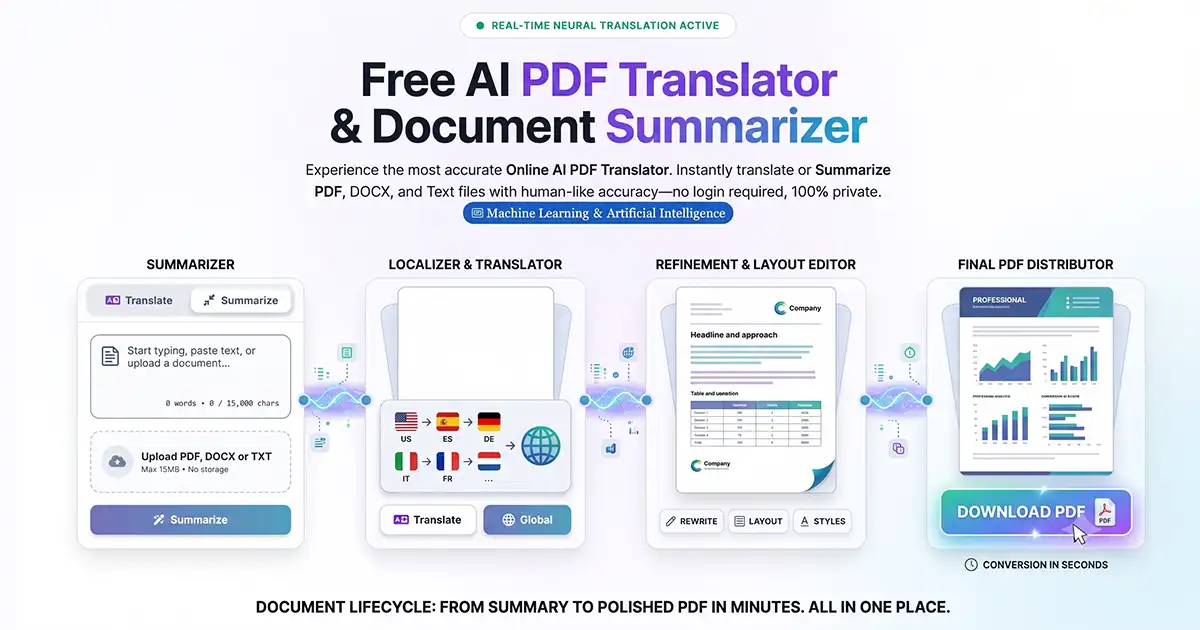
They are synthesized across text, visuals, data, and context—inside a single intelligent workflow.
This shift may appear subtle, but it fundamentally changes how digital work is produced, shared, and consumed.
The Rise of AI Document Synthesis and Multimodal Creation
Traditional document tools treated media as add-ons. Text came first, images came later, and everything else lived in separate files.
Modern AI systems no longer think this way.
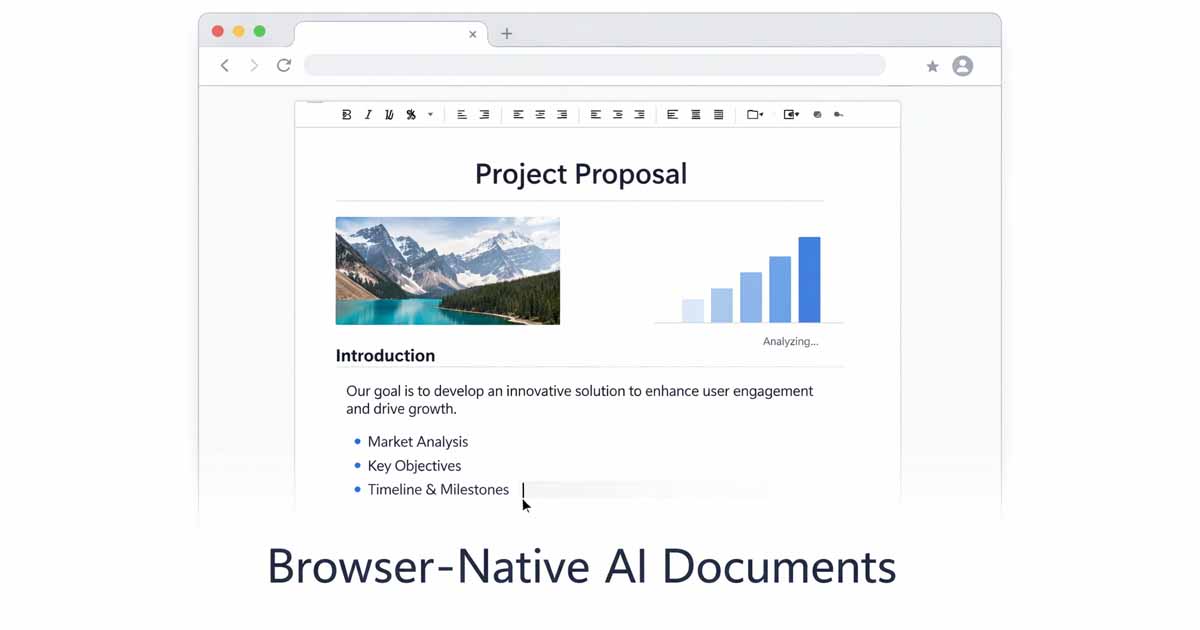
AI document synthesis treats text, images, charts, audio, and structured data as equal inputs within a single context window. Instead of generating a paragraph and then decorating it, AI systems coordinate all elements toward one unified intent.
A report is no longer just text with visuals.
It becomes a cohesive output where each medium reinforces the others.
This is why modern documents feel less like pages and more like designed experiences.
Context Awareness Changes the Meaning of a Document
Older software assumed one document served one purpose.
In reality, context has always mattered:
Who is reading it?
Where will it be used?
What level of detail is required?
Context-aware AI systems now adapt documents dynamically based on:
audience
platform
use case
timing
The same source content can instantly become:
a detailed report
a simplified summary
a formatted invoice
a visual presentation
The document itself is no longer fixed.
Only the intent remains constant.
From Prompt-Response to Agentic Document Workflows
Early AI tools reacted to single prompts. You asked, it answered.
In 2026, document creation is increasingly agentic.
Instead of responding once, AI systems now:
plan the task
gather relevant information
generate structured content
format outputs for specific use cases
refine results based on constraints
This does not replace human decision-making.
It removes repetitive, mechanical effort.
The human defines what needs to be created.
The system determines how it comes together.
Documents Are Becoming Queryable Knowledge Streams
Perhaps the most important shift is invisible.
Documents are no longer just files stored in folders. Through AI document synthesis, they are becoming queryable knowledge streams.
Instead of scrolling through entire PDFs or searching static pages, systems retrieve:
specific data points
exact sections
relevant visual elements
contextual answers
Documentation evolves from a static archive into a live reference layer.
A document no longer just displays information.
It actively answers questions.
What This Means for Everyday Users
These changes are not limited to large enterprises or research labs.
They are already affecting everyday tasks:
invoices that adapt to regional formats
certificates generated instantly without setup
reports created without rigid templates
documents produced without accounts or dashboards
The future of document creation is not complexity.
It is reduced friction.
Tools that require long onboarding, forced logins, and persistent tracking are increasingly misaligned with how people actually want to work.
Why Browser-Native Tools Matter More Than Ever
As documents become more intelligent, the infrastructure behind them matters.
Browser-native systems offer clear advantages:
instant access
no installation
lower privacy risk
global availability
This is why platforms like Free Document Maker focus on keeping document creation lightweight, fast, and accessible—powered by browser-native intelligence such as fdmGTP.
In a world where AI capabilities are accelerating, simplicity becomes a feature—not a limitation.
The Real Shift in 2026
The biggest change is not better text generation.
It is this:
Documents are no longer finished products.
They are adaptive systems built around intent.
Once documents are viewed through the lens of AI document synthesis, everything changes:
how tools are designed
how users interact
how trust and privacy are handled
The future of document creation belongs to systems that synthesize, adapt, and respect the user—not ones that lock work behind unnecessary complexity.
Final Thoughts
We often talk about the future of AI as if it were only about intelligence.
In reality, it is about usability.
The tools that succeed in 2026 will not be the loudest or the most complex. They will be the ones that quietly remove friction and allow people to focus on meaningful work.
Documents are no longer written.
They are synthesized—and the best ones disappear into the workflow, not the spotlight.