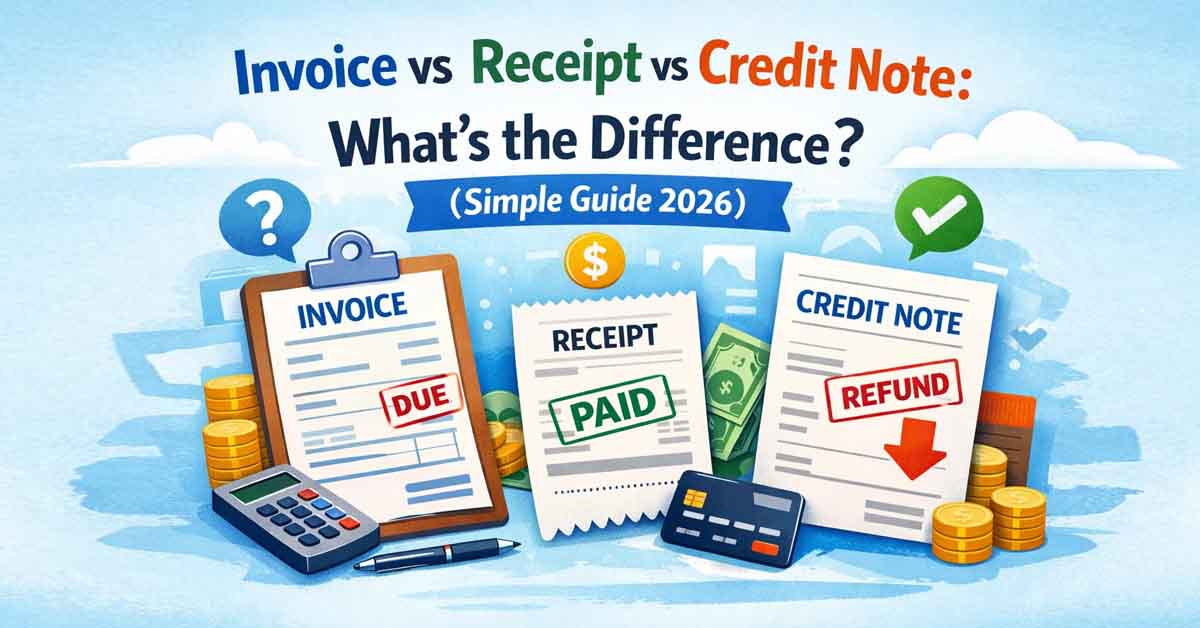
Many people use the terms invoice, receipt, and credit note interchangeably. In practice, these are three distinct business documents, each used at a specific stage of a transaction.
Using the wrong document can lead to accounting errors, payment confusion, and even tax issues — especially for freelancers, small businesses, and online sellers.
This guide clearly explains what each document means, when to use it, and how to create them online instantly without paid software.
What Is an Invoice?
An invoice is a formal document sent before payment. It is used to request payment from a client or customer after goods or services are delivered.
An invoice typically includes:
Seller and buyer details
Unique invoice number
Description of goods or services
Total amount due
Applicable tax (VAT / GST)
Payment due date
Invoices are essential for:
Freelancers billing clients
Businesses tracking revenue
Accounting and tax compliance
An invoice does not confirm payment — it simply requests it.
You can generate a professional invoice instantly using the Free Invoice Generator, without installing software or creating an account.
What Is a Receipt?
A receipt is issued after payment. It serves as official proof that a payment has been completed.
A receipt usually includes:
Amount paid
Date of payment
Payment method (cash, card, bank transfer)
Reference to the original invoice (if applicable)
Seller or business details
Receipts are important for:
Customer records
Expense tracking
Refunds, returns, or warranty claims
Unlike an invoice, a receipt confirms that the transaction is complete. In many regions, issuing a receipt after payment is a legal requirement.
You can create and download a receipt instantly using the Free Receipt Generator.
What Is a Credit Note?
A credit note is issued when an invoice needs to be corrected, reduced, or partially refunded.
Common situations where a credit note is used include:
Returned or damaged products
Overcharged invoices
Cancelled services
Billing or tax calculation errors
A credit note:
References the original invoice
Displays the adjusted or refunded amount
Reduces the outstanding balance
In VAT or GST-based tax systems, credit notes are essential because they adjust previously reported tax amounts.
Credit notes are not the same as refunds, but they are often issued before or alongside a refund.
You can issue a professional credit note instantly using the Credit Note Generator.
Invoice vs Receipt vs Credit Note (Quick Comparison)
Invoice
Issued: Before payment
Purpose: Request payment
Confirms payment: No
Receipt
Issued: After payment
Purpose: Proof of payment
Confirms payment: Yes
Credit Note
Issued: After invoice
Purpose: Adjust or reduce an invoice
Confirms payment: No
Each document serves a unique role, and using the correct one ensures accurate financial records.
When Should You Use Each One?
Use an invoice when:
You complete work and need to request payment
You sell goods or services on credit
Use a receipt when:
A customer completes payment
You need official proof of payment
Use a credit note when:
Goods are returned
A pricing or tax error occurs
A partial refund is required
A single transaction may involve all three documentsat different stages.
Are These Documents Legally Important?
Yes. Invoices, receipts, and credit notes are official business records. They are commonly required for:
Accounting audits
Tax filing and compliance
Business disputes
Financial transparency
Even freelancers and small online businesses should store these documents properly to stay compliant and protected.
Create Invoices, Receipts, and Credit Notes Online for Free
You no longer need expensive accounting software to manage basic business documents.
With Free Document Maker, you can:
Create invoices instantly
Generate receipts after payment
Issue credit notes for corrections
Download clean PDFs without watermarks
Use tools without signup or subscriptions
This approach is ideal for freelancers, startups, students, and small business owners who want fast and simple document creation.
Final Thoughts
Invoices, receipts, and credit notes may look similar, but they serve very different purposes in a business workflow.
Knowing when to use each document helps you get paid faster, avoid accounting mistakes, and maintain professional records.
With modern browser-based tools, you can now create all three documents online for free — quickly, securely, and without complexity.